Ofsted Outstanding
Ofsted Outstanding ProviderOfficially Outstanding - Read More

MSc Ecological Restoration and Environmental Management University

Ask a Question Course Brochure How to Apply 

Location and start date

Cornwall College University Centre at the Eden Project - 21 September 2026

Level

Level 7 Levels Explained

Duration

1 Year

Attendance

Full-time

Subject area

Horticulture, Floristry & Arboriculture Find out more
Cornwall College University Centre at the Eden Project

Course information

This MSc programme is awarded by the University of Plymouth, which combines academic rigour with hands-on learning. Key principles and standards from the Society for Ecological Restoration (SER) and the Chartered Institute of Ecology and Environmental Management (CIEEM) are embedded throughout the curriculum to support your pathway to professional recognition.

This programme centres on four key priorities:
• Environmental Degradation and Restoration: understand how degraded ecosystems can be restored and enhanced
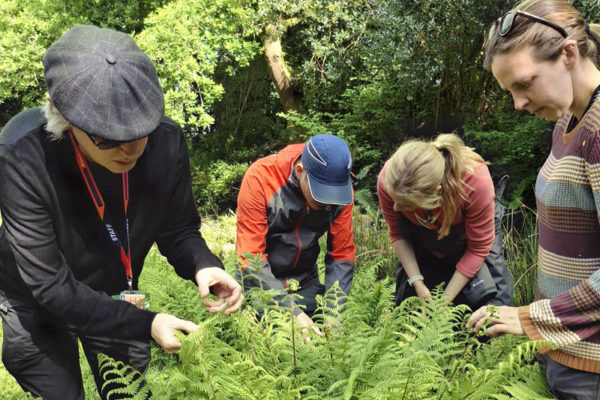
• Fieldwork and Facilities: gain practical experience on the Eden Project Estate and Labs, plus other sites around Cornwall
• Theory and Practice: learn the principles and implementation of environmental management
• Career Opportunities: preparation and guidance on work in the environmental industry and ecological research

Cornwall College University Centre at the Eden Project
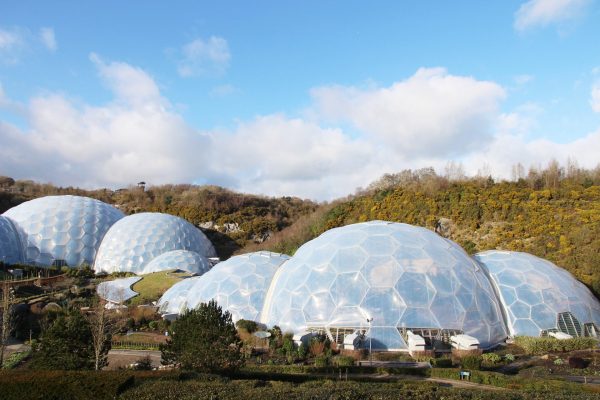
Teaching takes place at Cornwall’s iconic Eden Project, a world-renowned example of environmental regeneration and sustainable management of a post-industrial landscape. Situated within an area of active China clay extraction — the English county with the greatest proportion of derelict land — the Eden Project provides an ideal living laboratory.

As a student, you will benefit from access to Europe’s largest indoor rainforest, constructed soils, specialist laboratories, teaching spaces and IT facilities, as well as resources across other Cornwall College campuses and the University of Plymouth. Fieldwork is central to the programme, with visits to a range of local sites representing different scales and stages.

Future Careers
Graduates are well equipped to progress to PhD research or enter a wide range of roles in the national and international environmental sector.

Examples of student destinations include:
• Restoration Manager
• Consultant Ecologist
• PhD students
• Environment Agency Officer
• Climate & Sustainability Manager
• Sustainable Tourism Officer
• Council Ecologist
• Conservation Officer
• Community Woodland Manager
The MSc may be taken as full-time (September to August over one year); part-time (over two years)

The programme may also be taken as blended learning over two years. Classes are online one afternoon, with four study weekends at the Eden Project and one weekend online.

Planning & implementing a restoration programme: In this module, you will explore how restoration projects move from vision to action. You define clear ecological objectives, consider environmental and regulatory contexts, and learn how to plan, manage and deliver projects effectively. Through workshops and case studies, you will develop key skills in project design, coordination and environmental appraisal.

Terrestrial Ecology: This module develops knowledge and skills for terrestrial ecosystem restoration, focusing on habitat recovery, biodiversity, and ecosystem function. Students examine restoration practices, habitat management, and industry approaches through theory and case studies, with an emphasis on land-use impacts, evidence-based interventions, and threats such as climate change, invasive species, and land-use pressures.

GIS and Remote Sensing: This module explores the use of Geographical Information Systems (GIS) and Remote Sensing in ecology. It highlights the need for accurate baseline data on the physical environment, incorporating biotic and abiotic factors, including remotely sensed data. Learners will conduct monitoring to assess progress against objectives and develop GIS datasets by integrating information from multiple sources.

Postgraduate Research Skills: The module builds research and communication skills for postgraduates undertaking hypothesis-led projects in their field. It covers research philosophy, design, analysis, ethics, management, and effective communication, providing guidance on career development and presentation skills.

Aquatic & Wetland Restoration: Wetland ecosystems and riparian zones include a range of naturally biodiverse and globally important habitat types that continue to experience degradation due to the activities of humans. This module reviews threats to habitats within these ecosystems and the effectiveness of practical techniques for restoring the structure, function, and resilience of habitats.

Work Placement: Building on at least 120 hours of work-based experience with ecological restoration or environmental management practitioners, students reflect critically on their skills, behaviours and sector knowledge. Using professional standards to guide their evaluation, students will produce a development plan for future career or academic progression.

Surveying in the Natural Environment: Explore the natural world through hands-on surveying of habitats, species, soils and landforms. You will develop essential field and lab skills, from identifying protected species to interpreting soils and geodiversity. This practical module builds your confidence in reading landscapes and understanding the systems that shape them.

Dissertation: This module facilitates detailed planning and undertaking of original research, data analysis, and synthesis of results while allowing reflection and independent thought in collaboration with the project supervisor. Students will then submit the report in accordance with agreed-upon conventions.

Please note that those studying in person must choose between the Aquatic & Wetland Restoration and the Work Placement modules, as these are optional modules. For those who are studying remotely through blended learning, these modules are mandatory. Meanwhile, the Surveying in the Natural Environment module is not available for the blended learning study mode.

A good honours degree (minimum 2:2) or equivalent in a relevant discipline. We welcome applicants from a variety of subjects, including career changers and those with equivalent international credentials. Mature applicants with relevant professional experience are encouraged to apply and will be considered on an individual basis, alongside wider entry criteria.

Applicants must also have a minimum grade 4 / C in English Language at GCSE level OR a minimum overall score of 6.5, with a minimum of 5.5 in each of listening, reading, speaking and writing in IELTS.

The programme, taught by expert staff and awarded by the University of Plymouth, presents a unique opportunity for those wishing to make the world a better place. Still undecided? Why not find out more at our next open day.

As part of our interview process, it is essential that we obtain your formal permission to share aspects of your data with trusted work placement providers in order that reasonable adjustments can be made.

You are not required to complete a DBS (Disclosure and Barring Service) check or provide a Certificate of Good Conduct to study this course.

If you are currently subject to any license condition or monitoring restriction that could affect your ability to successfully complete your studies, you will be required to disclose your criminal record. Conditions include, but are not limited to:

• Access to laboratory facilities including chemicals
• Access to computers or devices that can store images
• Use of internet and communication tools/devices
• Curfews
• Freedom of movement
• Contact with people related to University Centre Eden or The Cornwall College Group

Cornwall College University Centre at the Eden Project

Cornwall College University Centre at the Eden Project

In partnership with the Eden Project, we’ve created a unique suite of university-level programmes that align with Eden’s mission to make the world a better place. Delivered by expert trainers from Cornwall College, these programmes are taught within Eden’s unique learning environment, offering students not only an academic education but also practical, hands-on experience at this globally renowned visitor attraction and garden. Our degrees, awarded by the University of Plymouth, provide an unparalleled blend of theory and real-world application. Discover more at our upcoming Open Day!


Find out more about studying with us


Share

Course Code 10054-EDN-26

Courses listed on this website are indicative of the subject, nature and level of study. The College reserves the right to alter specific qualifications titles, awarding bodies and levels of qualification, which can change in year. Any cost may also vary, based on personal funding eligibility. The Cornwall College Group reserves the right to withdraw any course listed at any time.

Cornwall College University Centre at the Eden Project

Apply for this course

Course type: University
Apply now
Tuition Fees: £12000.00
Per academic year for UK students. Detailed information can be found in our Financial Support Section.
Financial support for University students
Ask a Question Download a course brochure
In partnership with
PLY
MSc Ecological Restoration and Environmental Management Level 7 Cornwall College University Centre at the Eden Project https://www.cornwall.ac.uk/wp-content/uploads/2020/03/EDEN-CC-DC-CAMPUS-BIOME-SHOT-scaled.jpg Land, Eco, EcologicalResotration, Conservation, Ecology